DIY Tools · Plant Finder

Choose for the place the plant will become.

Filter a focused list for Colorado Springs conditions, then compare mature size, water needs, useful characteristics, and the drawbacks that rarely make it onto a nursery tag.

20 plants match your site

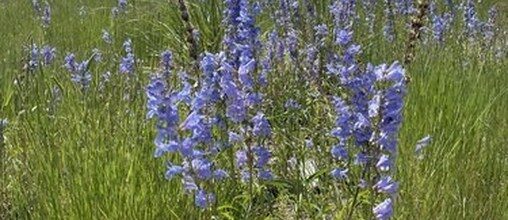
Rocky Mountain penstemon with violet-blue flower spikes in a sunny planting
Photo: Stephen Hornbeck · CC BY ↗
Flower

Rocky Mountain penstemon

Penstemon strictus

CO nativeDeer-smartRabbit-smartPollinator
Mature height
18–30 in.
Mature spread
12–18 in.
Time to mature
2–3 years
Light
Full sun
Water
Low
Deer
Usually avoided
Rabbits
Usually avoided
Ideal planting time
Spring or early fall

Why it works: Violet-blue flower spikes in late spring and early summer.

Good for: Dry borders, pollinator beds, and naturalistic groups.

Care and possible drawbacks

Care: Leave basal foliage through winter. Cut old stems in early spring and avoid heavy mulch over the crown.

Know before planting: Short-lived in rich or poorly drained soil; allow some reseeding.

Blanketflower with red and gold petals surrounding a deep red center
Photo: Macdon · CC0 ↗
Flower

Blanketflower

Gaillardia aristata

CO nativeDeer-smartRabbit-smartPollinator
Mature height
18–30 in.
Mature spread
18–24 in.
Time to mature
1–2 years
Light
Full sun
Water
Low
Deer
Usually avoided
Rabbits
Usually avoided
Ideal planting time
Spring or early fall

Why it works: Long red-and-gold bloom season with prairie character.

Good for: Sunny borders, gravel gardens, and hot reflected sites.

Care and possible drawbacks

Care: Shear lightly after the first major bloom for a tidier repeat. Leave some seedheads for birds.

Know before planting: Can look untidy late in the season and may reseed.

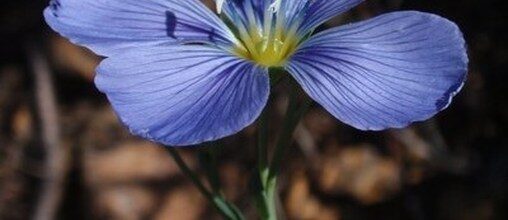
Close view of a blue flax flower showing its pale blue petals
Photo: Tom Hilton · CC BY ↗
Flower

Blue flax

Linum lewisii

CO nativeDeer-smartPollinator
Mature height
18–30 in.
Mature spread
12–18 in.
Time to mature
1–2 years
Light
Full sun
Water
Very low
Deer
Usually avoided
Rabbits
Sometimes browsed
Ideal planting time
Spring or early fall

Why it works: Clear blue flowers opening in waves from late spring onward.

Good for: Meadow planting, dry slopes, and between larger structural plants.

Care and possible drawbacks

Care: Cut back by roughly one-third after flowering if it becomes loose. Do not overwater.

Know before planting: Individual flowers last one day; it looks best in groups.

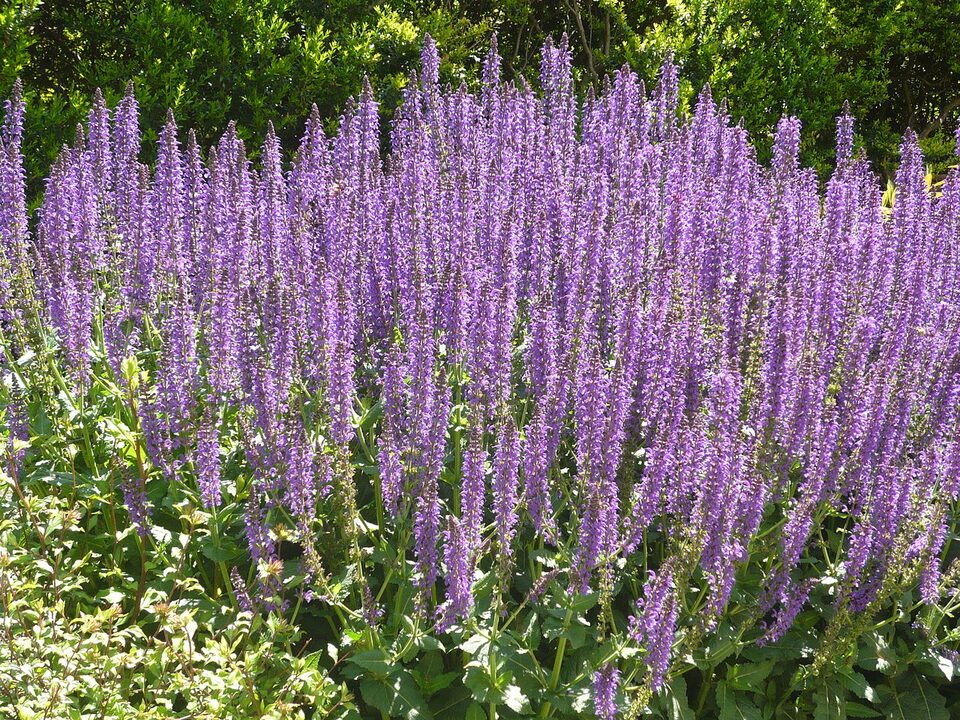
Mass of May Night salvia with upright violet flower spikes
Photo: Cillas · CC BY-SA 4.0 ↗
Flower

May Night salvia

Salvia × sylvestris ‘Mainacht’

Deer-smartRabbit-smartPollinator
Mature height
18–24 in.
Mature spread
18–24 in.
Time to mature
2 years
Light
Full sun
Water
Low
Deer
Usually avoided
Rabbits
Usually avoided
Ideal planting time
Spring or early fall

Why it works: Dense violet flower spikes and a tidy repeat-blooming habit.

Good for: Formal borders, front walks, and mass planting.

Care and possible drawbacks

Care: Shear spent spikes after the first bloom. Divide in spring when the center becomes woody.

Know before planting: Wet winter soil can shorten its life.

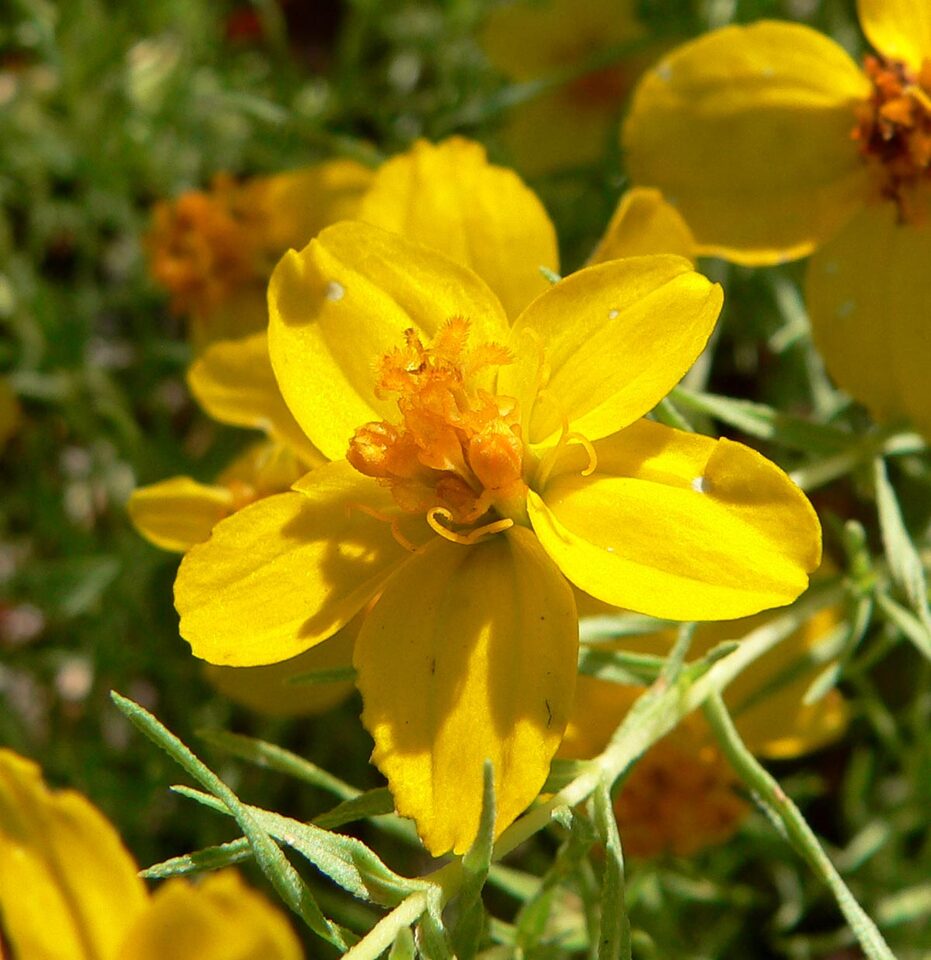
Close view of the small yellow flower of prairie zinnia
Photo: Stan Shebs · CC BY-SA 3.0 ↗
Groundcover

Prairie zinnia

Zinnia grandiflora

CO nativeDeer-smartPollinator
Mature height
4–8 in.
Mature spread
12–24 in.
Time to mature
2–3 years
Light
Full sun
Water
Very low
Deer
Usually avoided
Rabbits
Sometimes browsed
Ideal planting time
Spring, after the soil begins to warm

Why it works: Small yellow flowers over a low native mat.

Good for: Hot gravel edges, dry slopes, and low-water foregrounds.

Care and possible drawbacks

Care: Keep the first season weeded and water deeply but infrequently. Little pruning is needed.

Know before planting: Slow to establish and dislikes rich, wet soil.

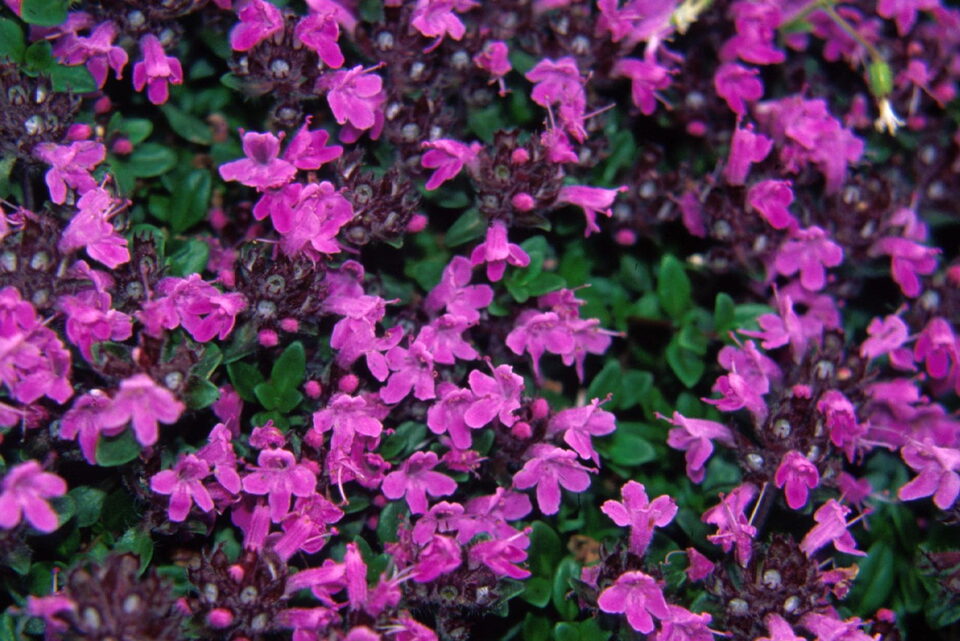
Creeping thyme forming a low carpet of foliage and purple flowers
Photo: Alpsdake · Public domain ↗
Groundcover

Creeping thyme

Thymus serpyllum

Deer-smartRabbit-smartPollinator
Mature height
2–4 in.
Mature spread
12–24 in.
Time to mature
2–3 years
Light
Full sun
Water
Low
Deer
Usually avoided
Rabbits
Usually avoided
Ideal planting time
Spring or early fall

Why it works: Fragrant evergreen foliage and small summer flowers.

Good for: Between stepping stones, dry edges, and small sunny slopes.

Care and possible drawbacks

Care: Trim lightly after flowering. Do not bury the crown under mulch or winter debris.

Know before planting: Not a turf substitute under regular foot traffic; needs sharp drainage.

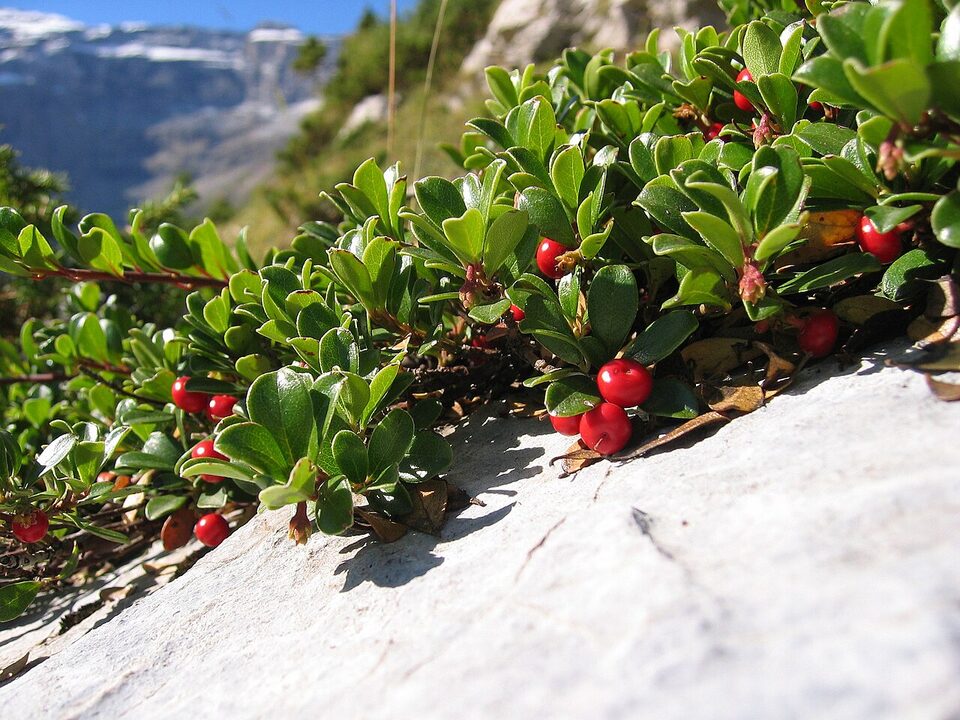
Kinnikinnick spreading over rock with evergreen leaves and red berries
Photo: Tigerente · CC BY 2.5 ↗
Groundcover

Kinnikinnick

Arctostaphylos uva-ursi

CO native
Mature height
4–8 in.
Mature spread
3–6 ft.
Time to mature
3–5 years
Light
Sun to part shade
Water
Low
Deer
Sometimes browsed
Rabbits
Sometimes browsed
Ideal planting time
Spring is safest

Why it works: Evergreen leaves, pale flowers, and red berries.

Good for: Slopes, rock gardens, and under open-canopy native plantings.

Care and possible drawbacks

Care: Avoid hard pruning. Water deeply during establishment and keep mulch away from trailing stems.

Know before planting: Slow to establish and performs poorly in wet clay without preparation.

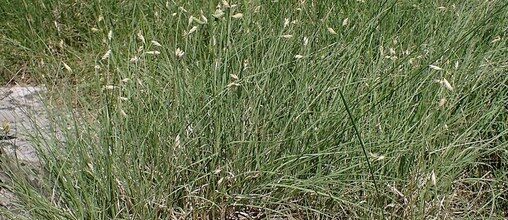
Blue grama grass showing the horizontal eyelash seedheads typical of the species
Photo: Krzysztof Ziarnek, Kenraiz · CC BY-SA 4.0 ↗
Ornamental grass

Blue grama ‘Blonde Ambition’

Bouteloua gracilis ‘Blonde Ambition’

CO native
Mature height
30–36 in.
Mature spread
18–24 in.
Time to mature
2–3 years
Light
Full sun
Water
Very low
Deer
Sometimes browsed
Rabbits
Often browsed
Ideal planting time
Late spring, after the soil warms

Why it works: Horizontal seedheads hold through winter and move in the wind.

Good for: Masses, gravel gardens, and contemporary low-water landscapes.

Care and possible drawbacks

Care: Cut to 3–5 inches in late winter or early spring before new growth.

Know before planting: Warm-season growth begins later than cool-season grasses.

Little bluestem growing as upright fine-textured grass clumps
Photo: David J. Stang · CC BY-SA 4.0 ↗
Ornamental grass

Little bluestem

Schizachyrium scoparium

CO nativeDeer-smart
Mature height
2–4 ft.
Mature spread
18–24 in.
Time to mature
2–3 years
Light
Full sun
Water
Low
Deer
Usually avoided
Rabbits
Sometimes browsed
Ideal planting time
Late spring, after the soil warms

Why it works: Blue-green summer blades turn copper and burgundy in fall.

Good for: Meadow groups, sunny foundations, and slopes.

Care and possible drawbacks

Care: Leave standing for winter structure. Cut to 4–6 inches in early spring.

Know before planting: May lean in rich soil or shade and can reseed modestly.

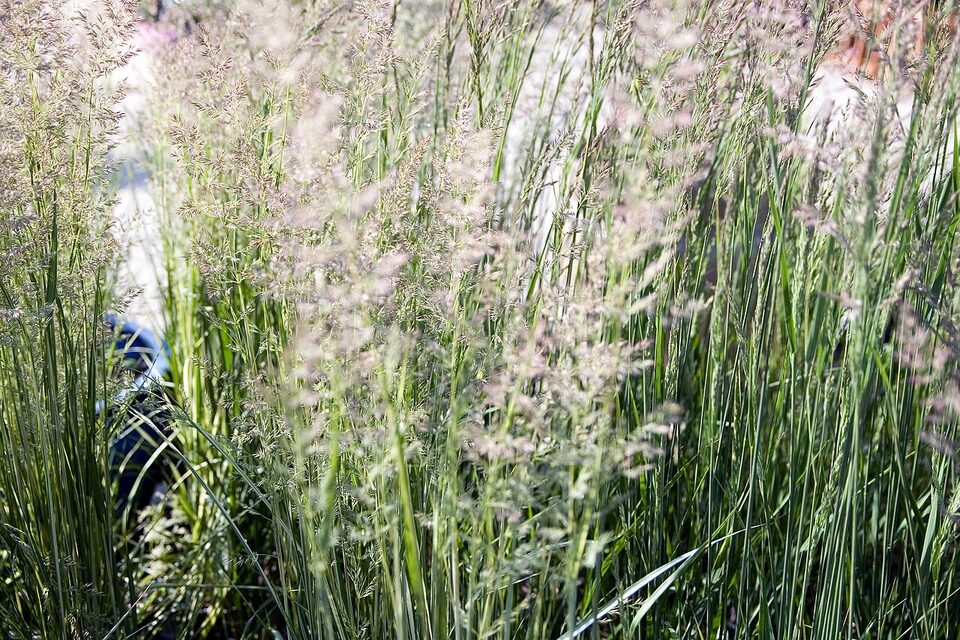
Karl Foerster feather reed grass with tall narrow flower plumes
Photo: David J. Stang · CC BY-SA 4.0 ↗
Ornamental grass

Karl Foerster feather reed grass

Calamagrostis × acutiflora ‘Karl Foerster’

Deer-smartRabbit-smart
Mature height
4–6 ft.
Mature spread
2–3 ft.
Time to mature
2–3 years
Light
Sun to part shade
Water
Moderate
Deer
Usually avoided
Rabbits
Usually avoided
Ideal planting time
Spring; container plants can go in through summer

Why it works: Strong vertical form with early, long-lasting flower plumes.

Good for: Screens, repeated accents, and narrow beds.

Care and possible drawbacks

Care: Cut to 6–8 inches in late winter. Divide in early spring when crowded.

Know before planting: Needs more water than native warm-season grasses; mature height can block views.

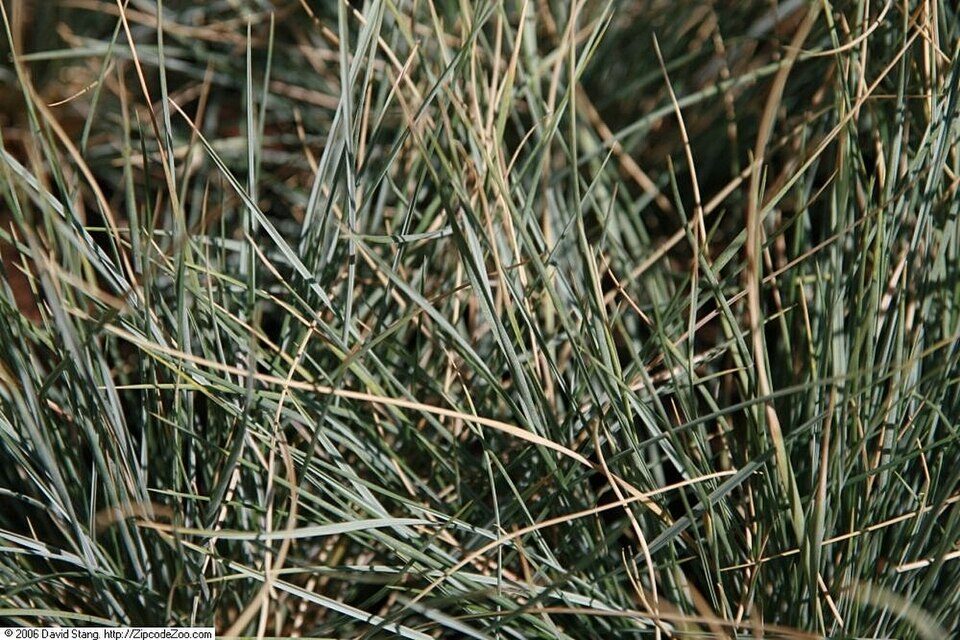
Blue oat grass forming a dense mound of narrow blue-gray leaves
Photo: David J. Stang · CC BY-SA 4.0 ↗
Ornamental grass

Blue oat grass

Helictotrichon sempervirens

Deer-smartRabbit-smart
Mature height
2–3 ft.
Mature spread
2–3 ft.
Time to mature
2–3 years
Light
Full sun
Water
Low
Deer
Usually avoided
Rabbits
Usually avoided
Ideal planting time
Spring or early fall

Why it works: Evergreen blue foliage with a clean architectural mound.

Good for: Rock gardens, modern borders, and repeated low accents.

Care and possible drawbacks

Care: Comb out dead foliage in spring instead of cutting flat. Divide only when necessary.

Know before planting: Can decline in wet clay or overly irrigated beds.

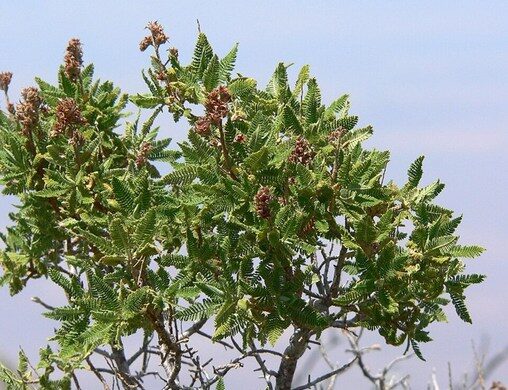
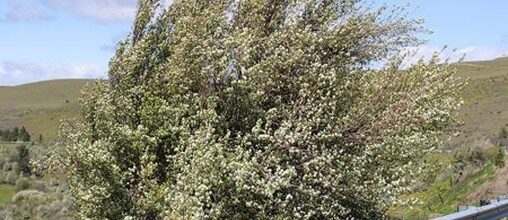
Fernbush foliage and flower clusters on a mature branch
Photo: Stan Shebs · CC BY-SA 3.0 ↗
Shrub

Fernbush

Chamaebatiaria millefolium

CO nativeDeer-smartRabbit-smartPollinator
Mature height
3–6 ft.
Mature spread
3–6 ft.
Time to mature
4–6 years
Light
Full sun
Water
Very low
Deer
Usually avoided
Rabbits
Usually avoided
Ideal planting time
Spring or early fall

Why it works: Fernlike foliage and fragrant white summer flowers.

Good for: Dry screening, wildlife gardens, and sunny slopes.

Care and possible drawbacks

Care: Thin the oldest stems in early spring if shaping is needed. Avoid shearing into a tight ball.

Know before planting: Can become broad and informal; allow its mature width.

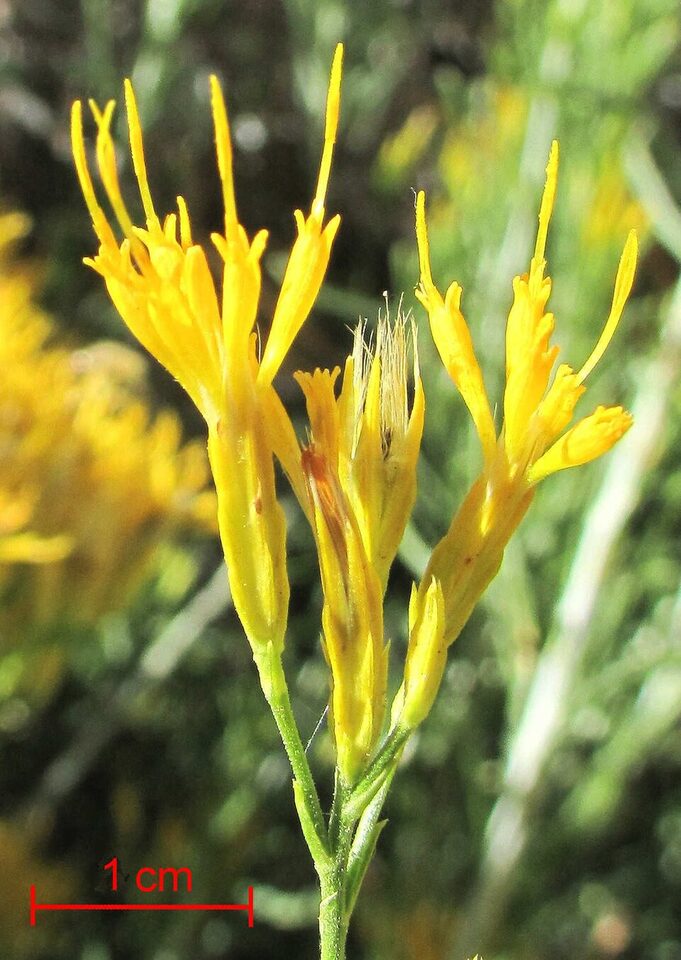
Close view of the small yellow flower clusters of rubber rabbitbrush
Photo: Davefoc · CC BY-SA 3.0 ↗
Shrub

Rabbitbrush ‘Baby Blue’

Ericameria nauseosa ‘Baby Blue’

CO nativeDeer-smartPollinator
Mature height
3–5 ft.
Mature spread
3–5 ft.
Time to mature
3–5 years
Light
Full sun
Water
Very low
Deer
Usually avoided
Rabbits
Sometimes browsed
Ideal planting time
Spring or early fall

Why it works: Silver-blue foliage and brilliant yellow late-summer flowers.

Good for: Native beds, hot dry exposures, and fall color near dark stone.

Care and possible drawbacks

Care: Reduce by up to one-third in early spring; never cut into leafless old wood.

Know before planting: The photograph shows the species; the compact cultivar differs in form. Plants may look loose after flowering and can reseed in open gravel.

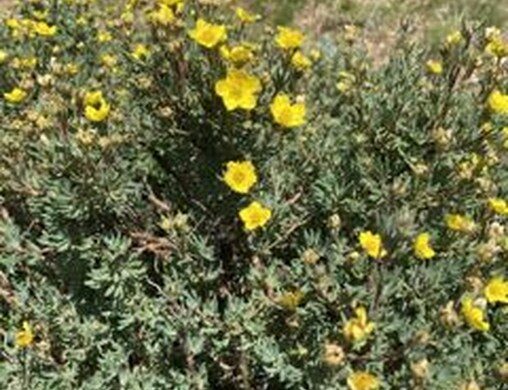
Shrubby cinquefoil with small yellow flowers and fine-textured foliage
Photo: iNaturalist contributor · CC0 ↗
Shrub

Shrubby cinquefoil

Dasiphora fruticosa

CO nativePollinator
Mature height
2–4 ft.
Mature spread
2–4 ft.
Time to mature
3–5 years
Light
Sun to part shade
Water
Low
Deer
Sometimes browsed
Rabbits
Sometimes browsed
Ideal planting time
Spring or early fall

Why it works: A long season of yellow, white, or pale-pink flowers.

Good for: Low informal hedges, foundations, and mixed borders.

Care and possible drawbacks

Care: Thin a few oldest stems at ground level in early spring. Shape lightly after flowering.

Know before planting: Old plants become twiggy if repeatedly sheared.

Western serviceberry growing as a large flowering multi-stem shrub
Photo: Chris Light · CC BY-SA 4.0 ↗
Shrub

Western serviceberry

Amelanchier alnifolia

CO nativePollinator
Mature height
8–15 ft.
Mature spread
6–12 ft.
Time to mature
6–10 years
Light
Sun to part shade
Water
Low
Deer
Often browsed
Rabbits
Often browsed
Ideal planting time
Spring or early fall

Why it works: White spring flowers, edible berries, and orange-red fall color.

Good for: Large mixed borders, wildlife gardens, and multi-stem screens.

Care and possible drawbacks

Care: Thin older stems after flowering or in dormancy. Water during extended drought.

Know before planting: May sucker and berries attract birds; allow space away from narrow walks.

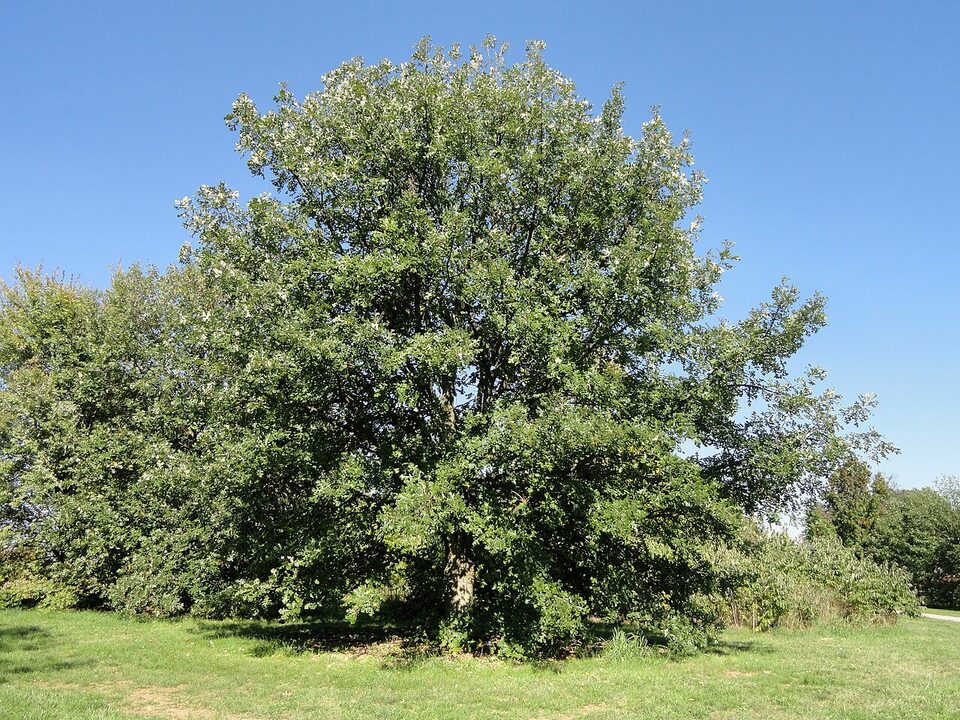
Mature bur oak showing a broad rounded canopy
Photo: Daderot · CC0 ↗
Tree

Bur oak

Quercus macrocarpa

Mature height
50–70 ft.
Mature spread
50–70 ft.
Time to mature
25+ years
Light
Full sun
Water
Low
Deer
Sometimes browsed
Rabbits
Often browsed
Ideal planting time
March 15–June 15 or September 1–October 15

Why it works: A long-lived shade tree with rugged bark and strong branching.

Good for: Large lots where a permanent canopy has room to develop.

Care and possible drawbacks

Care: Train a strong central structure while young. Deep-water during establishment and prolonged drought.

Know before planting: Far too large for small yards; consider acorns and mature spread.

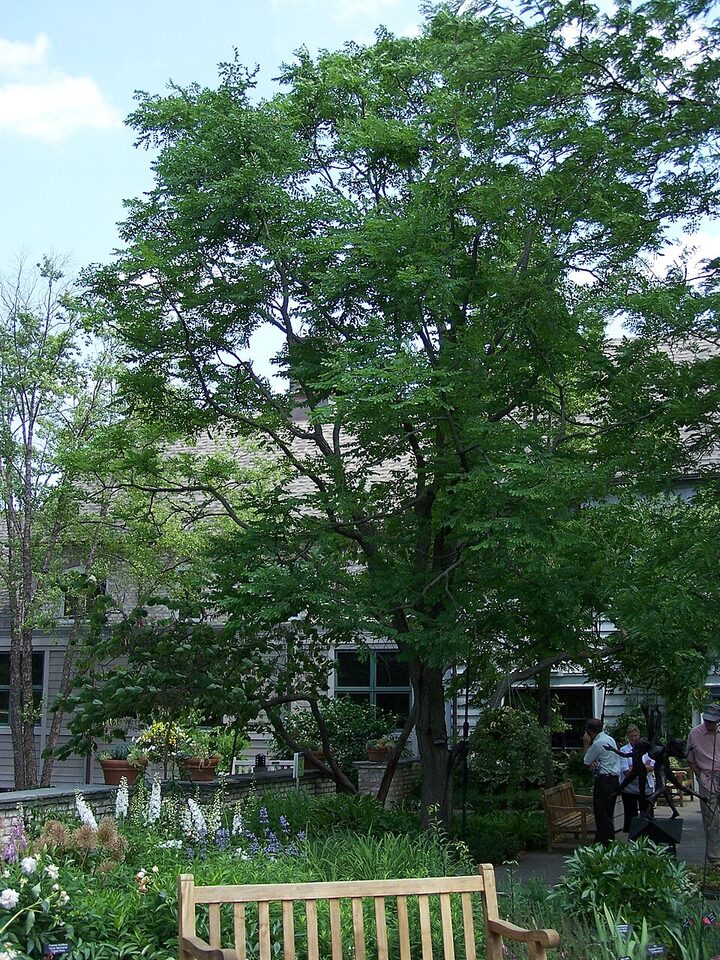
Full Kentucky coffeetree with an upright trunk and open compound-leaved canopy
Photo: SEWilco · CC BY-SA 3.0 ↗
Tree

Kentucky coffeetree

Gymnocladus dioicus

Deer-smart
Mature height
50–70 ft.
Mature spread
35–50 ft.
Time to mature
20+ years
Light
Full sun
Water
Low
Deer
Usually avoided
Rabbits
Sometimes browsed
Ideal planting time
March 15–June 15 or September 1–October 15

Why it works: Bold branching, large compound leaves, and filtered shade.

Good for: Large lawns and broad planting areas where winter structure matters.

Care and possible drawbacks

Care: Structural-prune when young. Keep turf and mulch away from the trunk flare.

Know before planting: Late to leaf out; female trees make large pods. Choose a male cultivar if needed.

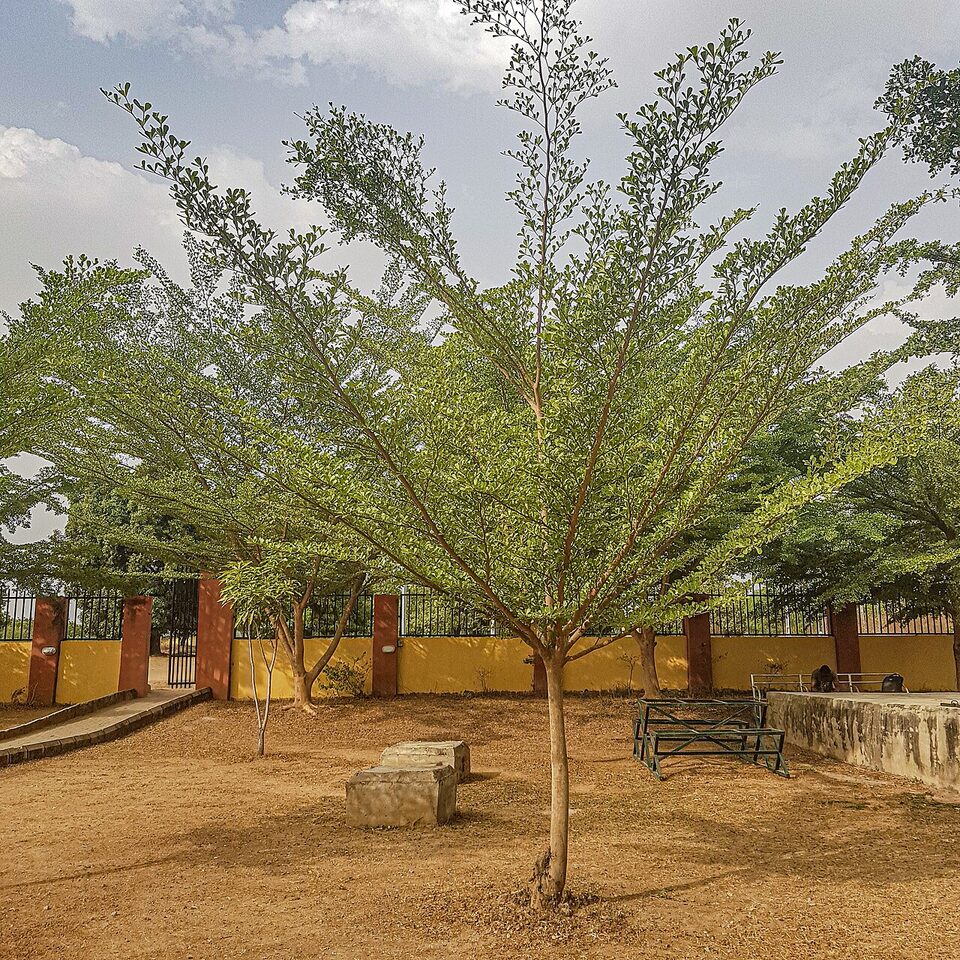
Common hackberry growing as a medium-sized shade tree
Photo: Philipola · CC0 ↗
Tree

Common hackberry

Celtis occidentalis

CO native
Mature height
40–60 ft.
Mature spread
35–50 ft.
Time to mature
15–25 years
Light
Full sun
Water
Low
Deer
Often browsed
Rabbits
Often browsed
Ideal planting time
March 15–June 15 or September 1–October 15

Why it works: A tough shade tree with corky bark and small fruit used by birds.

Good for: Large residential lots and exposed sites needing durable canopy.

Care and possible drawbacks

Care: Correct crossing branches while young. Water deeply during establishment and dry winters.

Know before planting: Can develop witches’-broom and drops small berries; not for tight strips.

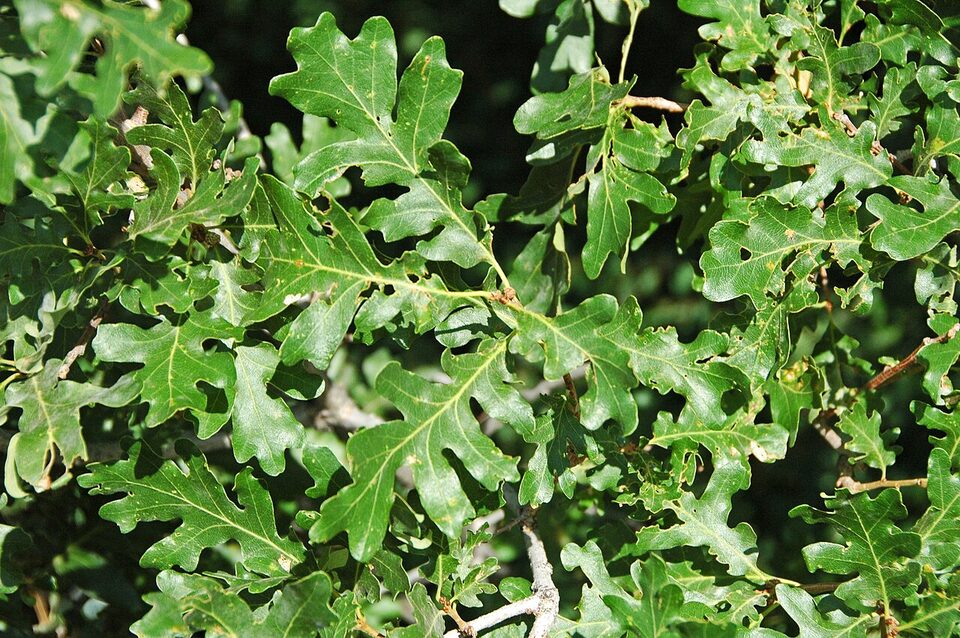
Close view of the deeply lobed leaves of Gambel oak
Photo: James St. John · CC BY 2.0 ↗
Tree

Gambel oak

Quercus gambelii

CO native
Mature height
15–30 ft.
Mature spread
12–25 ft.
Time to mature
10–20 years
Light
Full sun
Water
Very low
Deer
Often browsed
Rabbits
Often browsed
Ideal planting time
Spring is safest; early fall can work

Why it works: Native oak character, wildlife value, and orange-red fall color.

Good for: Naturalized edges and larger properties with room for colonies.

Care and possible drawbacks

Care: Thin selectively for structure and remove unwanted suckers while small. Do not top.

Know before planting: Spreads by suckers and is difficult to confine near small beds or hardscape.

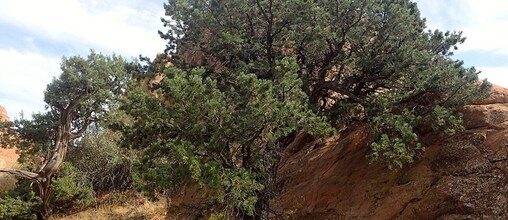
Mature pinyon pine growing naturally among red rock and dryland vegetation
Photo: Krzysztof Ziarnek, Kenraiz · CC BY-SA 4.0 ↗
Tree

Pinyon pine

Pinus edulis

CO nativeDeer-smart
Mature height
15–30 ft.
Mature spread
10–20 ft.
Time to mature
15–25 years
Light
Full sun
Water
Very low
Deer
Usually avoided
Rabbits
Sometimes browsed
Ideal planting time
Spring is safest

Why it works: A compact native evergreen with sculptural form and edible nuts.

Good for: Dry specimen planting and larger native landscapes.

Care and possible drawbacks

Care: Deep, infrequent establishment water and winter water in dry periods. Avoid unnecessary pruning.

Know before planting: Do not crowd against structures in wildfire-prone settings; drought stress can invite ips beetle.

Timing and wildlife are site-specific.

Planting windows assume workable soil, reliable establishment water, and no extreme heat or hard freeze. “Deer resistant” and “rabbit resistant” mean usually avoided—not guaranteed untouched.

Care guides by plant group

These are useful starting points for the Front Range—not rigid dates. Elevation, exposure, irrigation, and an unusually early or late season can move the right timing.

Late winter through spring

Perennials and flowers

Leave healthy stems and seedheads through winter when practical, then cut back before new growth. Divide crowded clumps in spring and avoid burying crowns under mulch.

Late February through April

Ornamental grasses

Warm-season grasses can stand through winter for structure. Cut before new blades emerge. Evergreen grasses are usually combed out rather than cut flat.

Depends on flowering habit

Shrubs

Thin older stems instead of repeatedly shearing the outside. Prune spring-flowering shrubs after bloom; prune many summer-flowering shrubs while dormant.

Dormant season for most structural work

Young trees

Protect the trunk flare, establish a wide mulch ring, and water deeply rather than frequently. Correct competing leaders while cuts are small.

First two growing seasons matter most

Low-water plants

Drought-tolerant does not mean no establishment water. Water deeply, allow soil to dry between cycles, and gradually reduce frequency.

Dry, mild days from October through March

Winter watering

Water when soil is not frozen and daytime temperatures permit, especially evergreens, young trees, and exposed south- or west-facing beds.

A good shortlist, not a site inspection.

Sun reflected from a wall, winter wind, irrigation overlap, drainage, animals, elevation, and soil disturbance can all change the right choice. Confirm availability and final suitability with a reputable local nursery or Colorado State University Extension guidance.